
Selling print online is far from being a new thing, but the way printers do it has changed a lot. What started out as simple product focused webpages with order forms has grown into fully integrated online print ordering complete with online templates, dynamic pricing, third party integrations and automated workflows.
The result leaves printers with a decision to make as to how best to utilise the technology available to them – either through a public ecommerce website or invest in private storefronts for key customers (or both).
Public ecommerce websites are open to anyone to use and can include a large print catalogue with global pricing. A private web to print storefront takes a different approach as they are built for specific customers or groups and sit behind a customer login. They’re commonly used by printers to help customers who regularly order print to do so easily by ensuring consistent branding on templates and include an agreed pricing structure.
What is a public ecommerce print store?
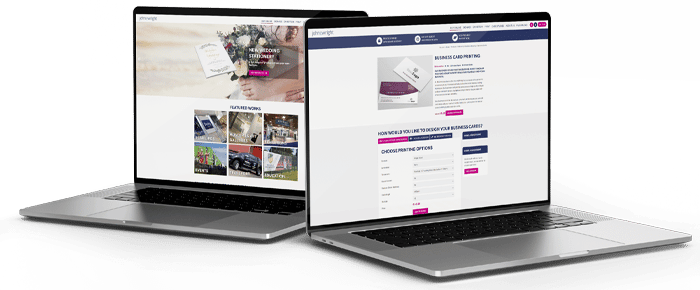
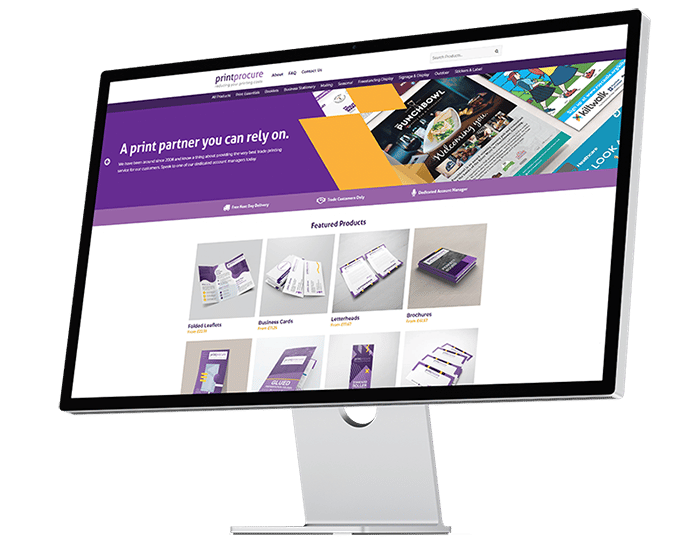
This is the first thing people think of when they consider selling print online. It’s a public website that anyone can visit, browse and place orders through. As much as possible they will resemble the same online shopping experiences as any ecommerce website.
For printing companies a public ecommerce print store will typically focus on a standard product catalogue, including business cards, flyers, leaflets, posters and banners. Customers can select a product, select their print options including size and finishes and view an online price. From here they can proceed to order online and upload artwork. The setup is designed to avoid the need to have a back and forth with the customer, they simply order online and the print job is fulfilled.
Because they’re open to anyone to visit, they can be promoted on search engines, social media and email campaigns. It should be seen as a key driver of new customers, who will potentially place repeat orders in the future.
What is a private print storefront?
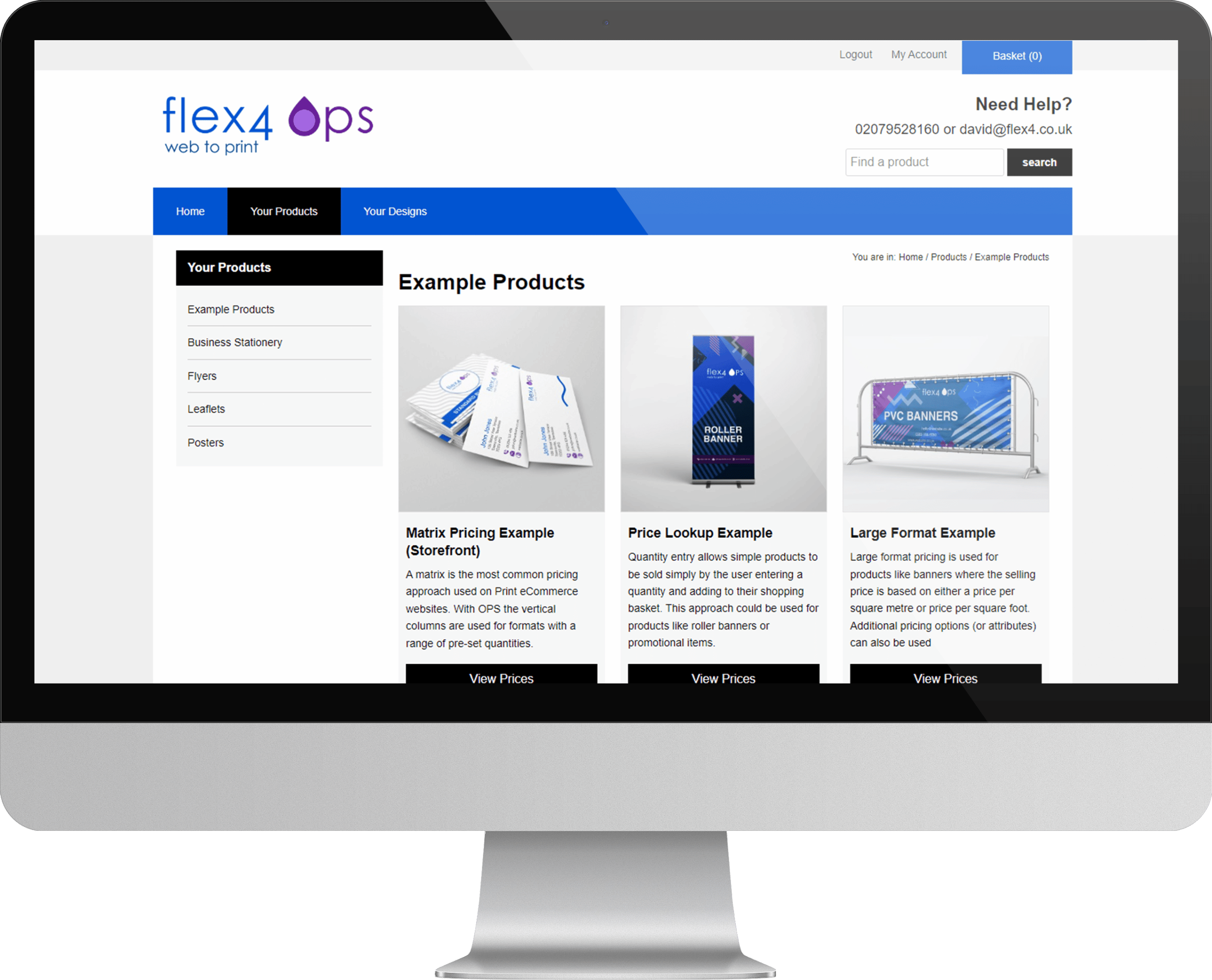
A private print storefront is more of an online print portal that’s been built for a specific customer or for an individual purpose. Access to it is usually restricted by a login and they are usually set up as part of an ongoing relationship with a customer, rather than a marketing channel.
They’re commonly used by corporate businesses, franchises, education providers or public bodies. For example, a company may set up a private storefront for their staff to be able to order their own print products such as business cards or posters. The storefront will include locked down templates that ensure branding and layouts remain consistent and simply allow the user to change wording and images.
The products and templates that are available can be tailored to each customer. Approval processes can be built in to allow orders to be reviewed centrally before actually going to print. Their use reduces errors, keeps branding consistent and limits unnecessary over ordering.
A private storefront is a tool to help retain important customers rather than something that is going to generate leads. The orders are predictable, customer demands will be lower (once setup) and help create long term relationships.
Can printing companies use both?
The reality is a growing number of print businesses successfully run both a public website and a series of private storefronts side by side. The combined approach can balance the need to acquire new customers with long term and reliable order revenue.
A public print ecommerce store can be the front door. Its job is to attract new customers, promote a print product catalogue and handle straightforward one-off orders. However, over time some repeat customers may grow and their requirements become more complex, and this is where a private storefront comes in.
It allows the printer to offer tailored pricing, controlled branded templates, and structured workflows without disrupting the efficiencies of the public store.
Using both helps printers protect margins. Price sensitive and relatively simple orders can be channelled through the public store, while higher value, contract-based work is managed through private storefronts. The printer can set realistic expectations and reduce unnecessary manual handling.
Key questions printers should ask
Who are my best customers?
If most of your customers are small businesses or individuals placing occasional orders, then utilising just a public ecommerce website makes sense. It allows customers to place online orders in their own time. If your customers are larger or order frequently, and usually the same product just with some small personalisation changes, a private storefront will serve them much better.
How complex are my print products?
Standard products with fixed sizes and finishes work well with public ecommerce websites. If certain customers require specific product specifications or tailored pricing private storefronts are much better at handling that complexity.
Can my company infrastructure handle high order volumes?
Public websites can generate a lot of orders in a short space of time, but only work well when production is automated. If manual processes are still common, your margins will suffer. Private storefronts will reduce customer queries and errors, even if volumes will potentially be lower.
Web to print from Flex4
With over 15 years of experience, helping print businesses streamline and automate their processes and creating seamless customer experiences, we are the experts to come to for Web to Print solutions. We create bespoke, scalable packages to suit any business so talk to us today and find a solution that suits yours.